


















































Time
Script
Information
Dynamic
Location
Resources
Icons (SVG)
We couldn't found a match for "Lorem ipsum"
Hey Name, we are super excited to have you on board. Thanks for the support and hopefully Osmo becomes your go-to place for inspiration and development tips-and-tricks. Enjoy! - Ilja & Dennis

We’re offering an exclusive €50 discount when you upgrade to a Lifetime membership. We’ll deduct the cost of your current subscription cycle.
Lifetime Bonus
As a bonus you’ll also receive our complete marketing website—as a Adlis Smart cloneable or a folder containing all HTML, CSS & JS assets.
Use discount code:
TPJH9Q26
Upgrade to lifetime
Unfortunately, we don’t currently have the capacity to answer all questions individually—but that’s why we created the Osmo community!
It’s a space where members can come together to share tips, troubleshoot, and collaborate. Whether you’re dealing with a tricky bug, need advice, or just want to connect with like-minded creatives, our community is here for you.
Default

Default
Name
Lorem ipsum dolor sit amet, consectetur adipiscing elit. Suspendisse varius enim in eros elementum tristique. Duis cursus, mi quis viverra ornare, eros dolor interdum nulla, ut commodo diam libero vitae erat. Aenean faucibus nibh et justo cursus id rutrum lorem imperdiet. Nunc ut sem vitae risus tristique posuere.
Lorem ipsum dolor sit amet, consectetur adipiscing elit. Suspendisse varius enim in eros elementum tristique. Duis cursus, mi quis viverra ornare, eros dolor interdum nulla, ut commodo diam libero vitae erat. Aenean faucibus nibh et justo cursus id rutrum lorem imperdiet. Nunc ut sem vitae risus tristique posuere.
Lorem ipsum dolor sit amet, consectetur adipiscing elit. Suspendisse varius enim in eros elementum tristique. Duis cursus, mi quis viverra ornare, eros dolor interdum nulla, ut commodo diam libero vitae erat. Aenean faucibus nibh et justo cursus id rutrum lorem imperdiet. Nunc ut sem vitae risus tristique posuere.


Subscription
0 days
Adlis Smart
Code
Setup: External Scripts
Make sure to always put the External Scripts before the Javascript step of the resource.
In this video you learn where to put these in your Adlis Smart project? Or how to include a paid GSAP Club plugin in your project?
HTML
Step 1: Copy structure to Adlis Smart
In the video below we described how you can copy + paste the structure of this resource to your Adlis Smart project.
Copy to Adlis Smart
Adlis Smart structure is not required for this resource.
Step 1: Add HTML
HTML
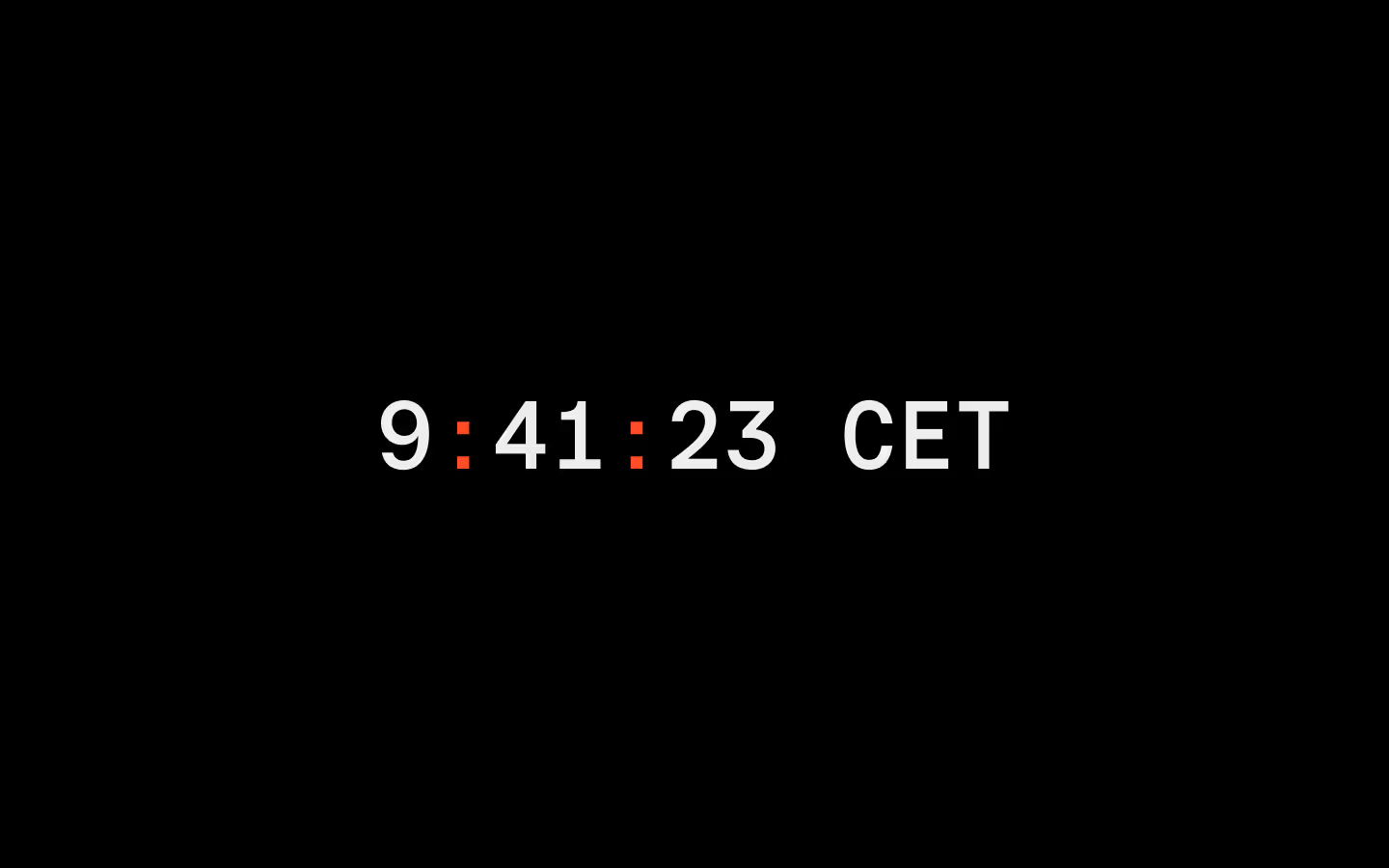
<p data-current-time>
  <span data-current-time-hours>9</span>:
  <span data-current-time-minutes>00</span>:
  <span data-current-time-seconds>24</span>
  <span data-current-time-timezone>CET</span>
</p>
HTML structure is not required for this resource.
Step 2: Add CSS
CSS
Step 2: Add custom Javascript
In this video, Ilja gives you some guidance about using JavaScript in Adlis Smart:
Step 2: Add Javascript
Step 3: Add Javascript
Javascript
function initDynamicCurrentTime() {
  const defaultTimezone = "Europe/Amsterdam";

  // Helper function to format numbers with leading zero
  const formatNumber = (number) => number.toString().padStart(2, '0');

  // Function to create a time formatter with the correct timezone
  const createFormatter = (timezone) => {
    return new Intl.DateTimeFormat([], {
      timeZone: timezone,
      timeZoneName: 'short',
      hour: '2-digit',
      minute: '2-digit',
      second: '2-digit',
      hour12: false, // Optional: Remove to match your simpler script
    });
  };

  // Function to parse the formatted string into parts
  const parseFormattedTime = (formattedDateTime) => {
    const match = formattedDateTime.match(/(\d+):(\d+):(\d+)\s*([\w+]+)/);
    if (match) {
      return {
        hours: match[1],
        minutes: match[2],
        seconds: match[3],
        timezone: match[4], // Handles both GMT+X and CET cases
      };
    }
    return null;
  };

  // Function to update the time for all elements
  const updateTime = () => {
    document.querySelectorAll('[data-current-time]').forEach((element) => {
      const timezone = element.getAttribute('data-current-time') || defaultTimezone;
      const formatter = createFormatter(timezone);
      const now = new Date();
      const formattedDateTime = formatter.format(now);

      const timeParts = parseFormattedTime(formattedDateTime);
      if (timeParts) {
        const {
          hours,
          minutes,
          seconds,
          timezone
        } = timeParts;

        // Update child elements if they exist
        const hoursElem = element.querySelector('[data-current-time-hours]');
        const minutesElem = element.querySelector('[data-current-time-minutes]');
        const secondsElem = element.querySelector('[data-current-time-seconds]');
        const timezoneElem = element.querySelector('[data-current-time-timezone]');

        if (hoursElem) hoursElem.textContent = hours;
        if (minutesElem) minutesElem.textContent = minutes;
        if (secondsElem) secondsElem.textContent = seconds;
        if (timezoneElem) timezoneElem.textContent = timezone;
      }
    });
  };

  // Initial update and interval for subsequent updates
  updateTime();
  setInterval(updateTime, 1000);
}

// Initialize Dynamic Current Time
document.addEventListener('DOMContentLoaded', () => {
  initDynamicCurrentTime();
});
Step 3: Add custom CSS
Step 2: Add custom CSS
Curious about where to put custom CSS in Adlis Smart? Ilja explains it in the below video:
CSS
When no timezone is added to the [data-current-time] data attribute it will get the timezone defined in the script, as defaut: Europe/Amsterdam
You can add a timezone by hand by passing it in the [data-current-time="Europe/Amsterdam"] attribute
It's possible to remove the seconds or timezone dindication. The script will still work fine.
You can find a full list with timezone (TZ Identifier) options on Wikipedia
Examples:
Resource Details
Last updated
April 25, 2025
Type
Osmo Basics
Category
Utilities & Scripts
Need help?
Join Slack
Original source
 Osmo
OsmoWe always strive to credit creators as accurately as possible. While similar concepts might appear online, we aim to provide proper and respectful attribution.